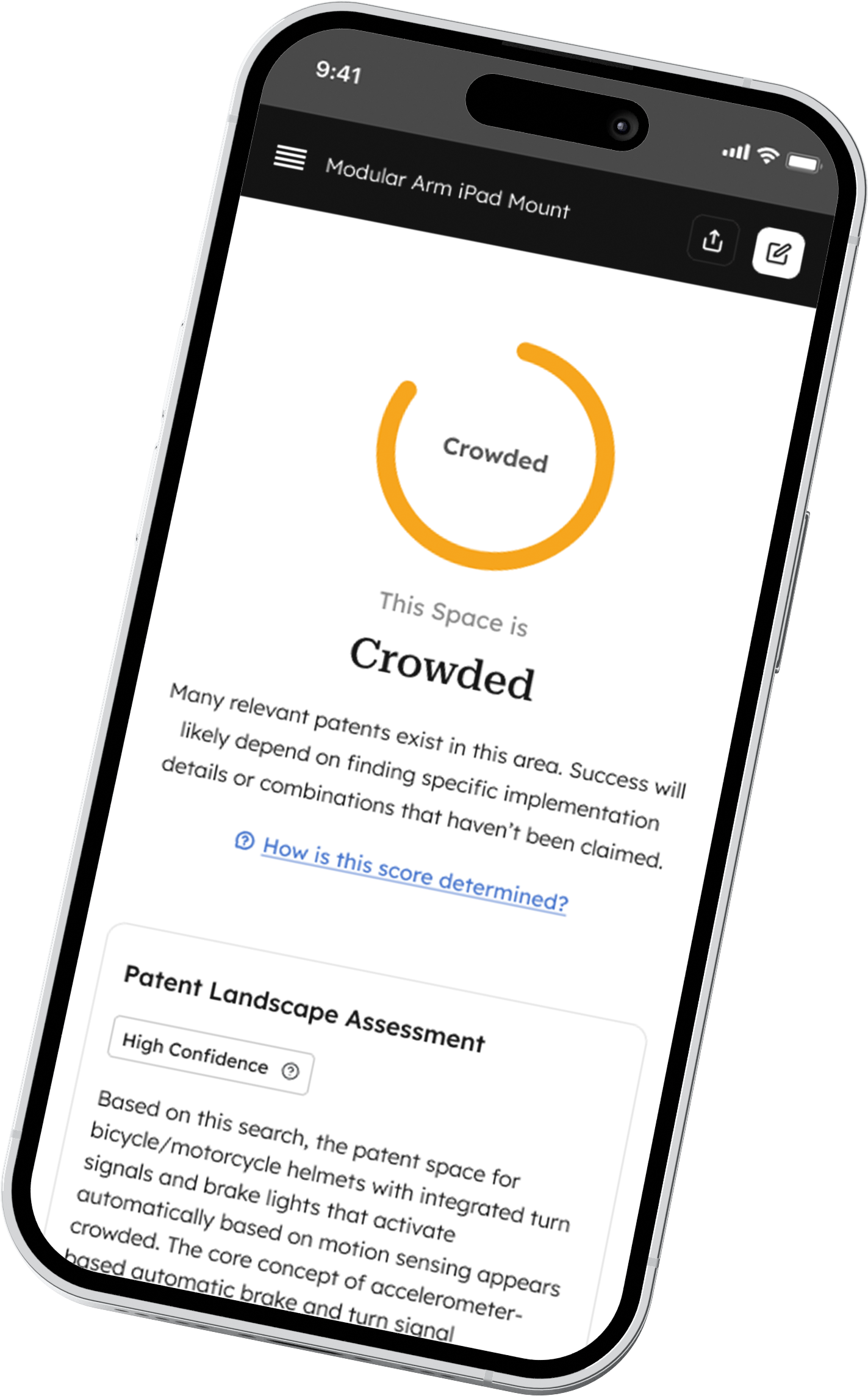
Find related patents
Describe what your invention does and review potentially relevant documents.

For independent inventors and product creators
Describe your idea in plain language. Explore related U.S. patents, understand similarities and differences, and use guided questions to refine your concept before you build or file.
Explore My IdeaSee How It WorksEarly patent research—not legal advice or a patentability or freedom-to-operate opinion.
 WHAT’S YOUR IDEA?
Answer a few focused questions to create a clearer description for comparison.
A modular bike helmet with integrated turn signals and brake lights that respond to rider movement…
Finding related patents is the starting point. NVENTOR helps you examine the overlap, explore possible differences, and decide what to investigate next.
Describe what your invention does and review potentially relevant documents.
Compare mechanisms and features with cited sources, not just a list of matches.
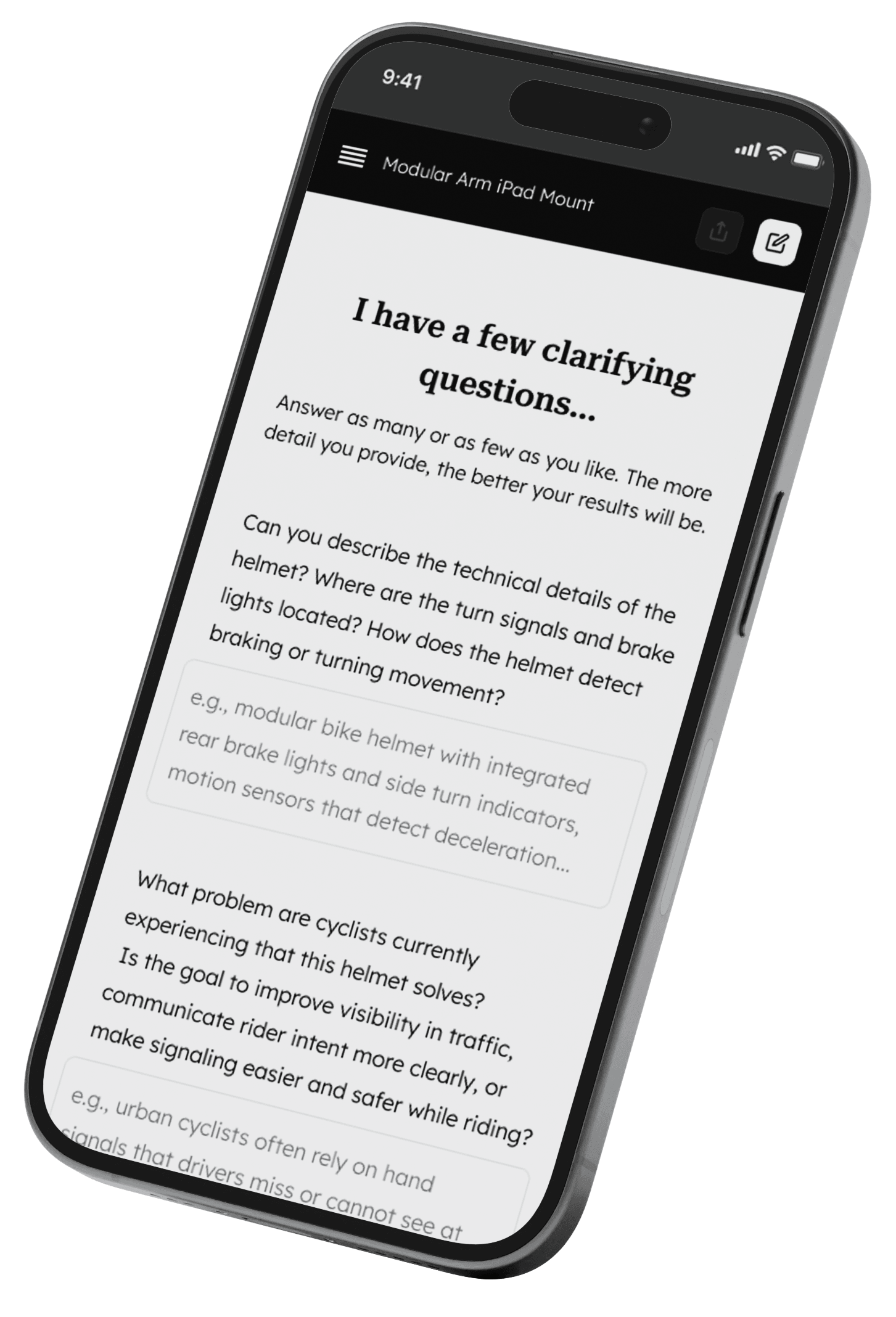
Work through questions that help clarify and differentiate your concept.
Use a structured report to discuss your idea with collaborators, stakeholders or patent counsel.
Start with your own explanation, compare it with related patents, and use guided questions to refine your concept.
Explain what it does, the problem it solves, and how it works.
ILLUSTRATIVE REPORT OVERVIEW
Review cited patent documents, understand why each result may matter, and leave with clearer questions for your next step. This is an illustrative overview, not a complete sample report or verified search methodology.
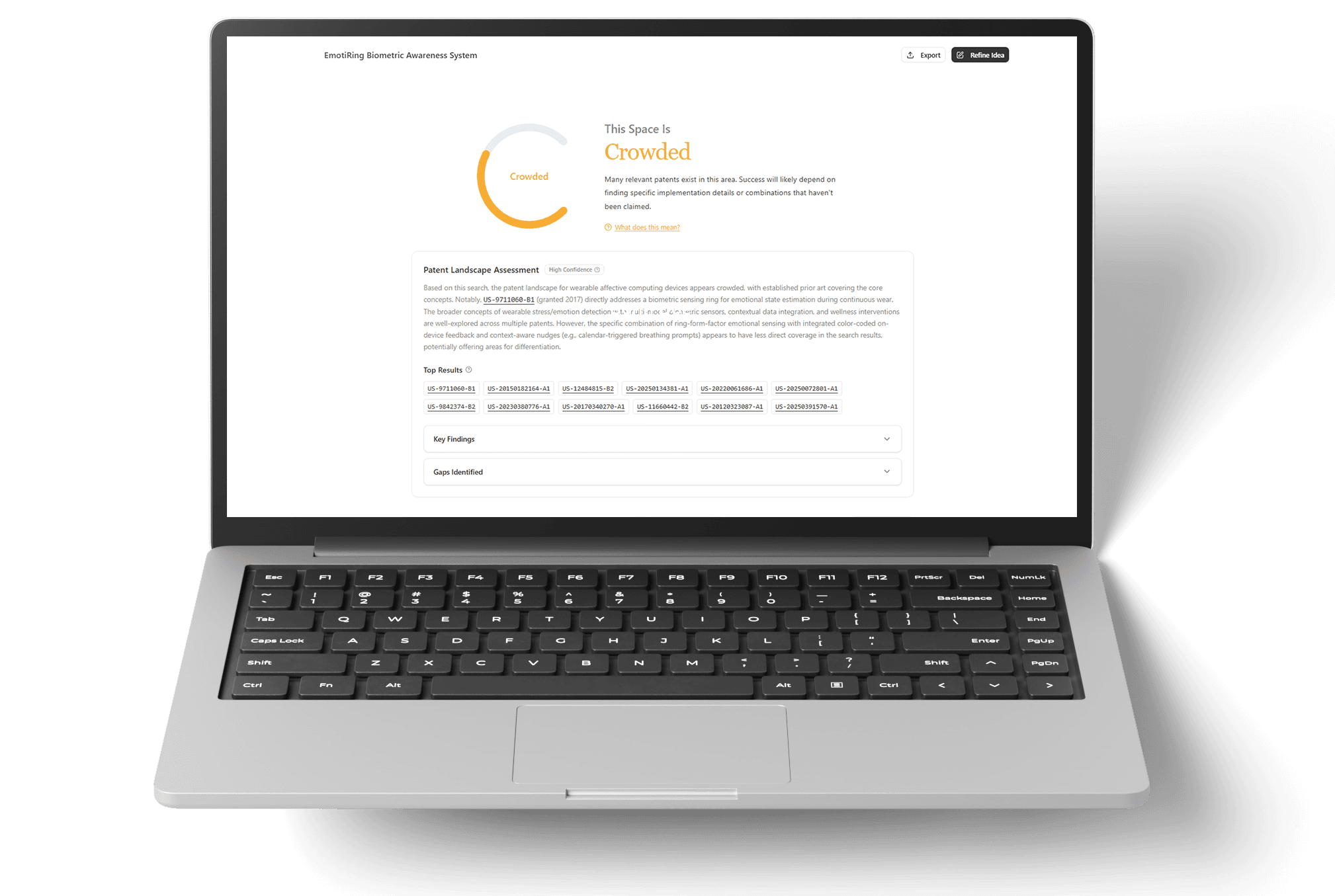
A clearer description, sources to review, and focused questions to discuss with collaborators or patent counsel.
BEFORE YOU SUBMIT
Review coverage, pricing, and idea-handling terms before sharing an invention. The details below identify what this preview does—and does not—confirm.
This preview describes U.S. patent research, not an exhaustive worldwide or non-patent-literature search. Exact sources, document types, exclusions, refresh cadence, and data-through date are not confirmed here.
Review current billing details before starting. This preview does not confirm a free allowance, payment or card requirements, or report turnaround time.
Review billing details ↗Review privacy terms before sharing confidential details. Confirm retention, model use, access, and deletion terms; this preview does not establish confidentiality or how submissions are handled.
Review privacy policy ↗Before you submit, you should be able to see how your idea is handled, what patent data is searched, and where the report’s conclusions stop.

Review how submissions are processed, stored, retained, and deleted before you begin.
Privacy and idea handling ↗
See the sources, document types, exclusions, and data-through date used for your report.
Coverage details to verify ↓
Understand the report’s scope, its limitations, and when to involve patent counsel.
Report boundary ↓NVENTOR is designed for independent inventors and early product teams who want an initial view of related patent activity before deciding what to investigate next.
A structured prior-art landscape that groups potentially relevant documents, explains why they may matter, and identifies questions for further review. It is research support, not a legal opinion.
No. NVENTOR supports early informational research. Patentability, infringement, freedom-to-operate, filing strategy, and legal opinions require qualified counsel.
Review the current privacy and data-handling terms before submitting an idea. They explain how submitted information is processed, retained, and deleted.
Explore related patents, examine similarities and differences, and take focused questions into your next iteration.
Continue to NVENTOR LoginThis link opens NVENTOR login. Review billing and privacy terms before submitting. Account requirements, payment steps, turnaround time, and idea handling are not confirmed by this preview.